
Perry County Warrant Searches
Start a Perry County warrant search with the Indiana MyCase portal, the best public entry point when a county case may exist. The Indiana Judicial Branch is clear about the limits. MyCase can display a warrant indicator inside a public criminal case summary, but it is not a warrant-search system. No statewide site searches every Indiana arrest warrant, and the Perry County Sheriff publishes no searchable criminal-warrant endpoint either. Work in this order to cut down on wrong matches and land on the office that owns the next step.
- Search a known case, citation, or cross-reference number in MyCase.
- Filter for Perry Circuit Court and review the public summary and events.
- If no identifier is known, use party fields cautiously and narrow the result.
- Ask the Clerk of the Perry Circuit Court to confirm public docket information.
- Contact counsel before surrender or call the sheriff for booking and bond procedure.
Tell City, Cannelton, and Troy have no current city-court portals. State administrative rules mark the former Tell City and Cannelton courts abolished. Local court matters now route through Perry Circuit Court, and an issuing police agency can help identify where an incident or citation was filed. That is where a Perry County warrant question gets answered.
MyCase and Perry County Warrants
The official MyCase help page states plainly that its display is not the official court record. Results can omit older material, documents never put online, and confidential cases. Financial data may be incomplete too. A visible indicator deserves verification, and a blank result does not prove that no warrant exists. The public search screen shows the entry point without exposing private case data.
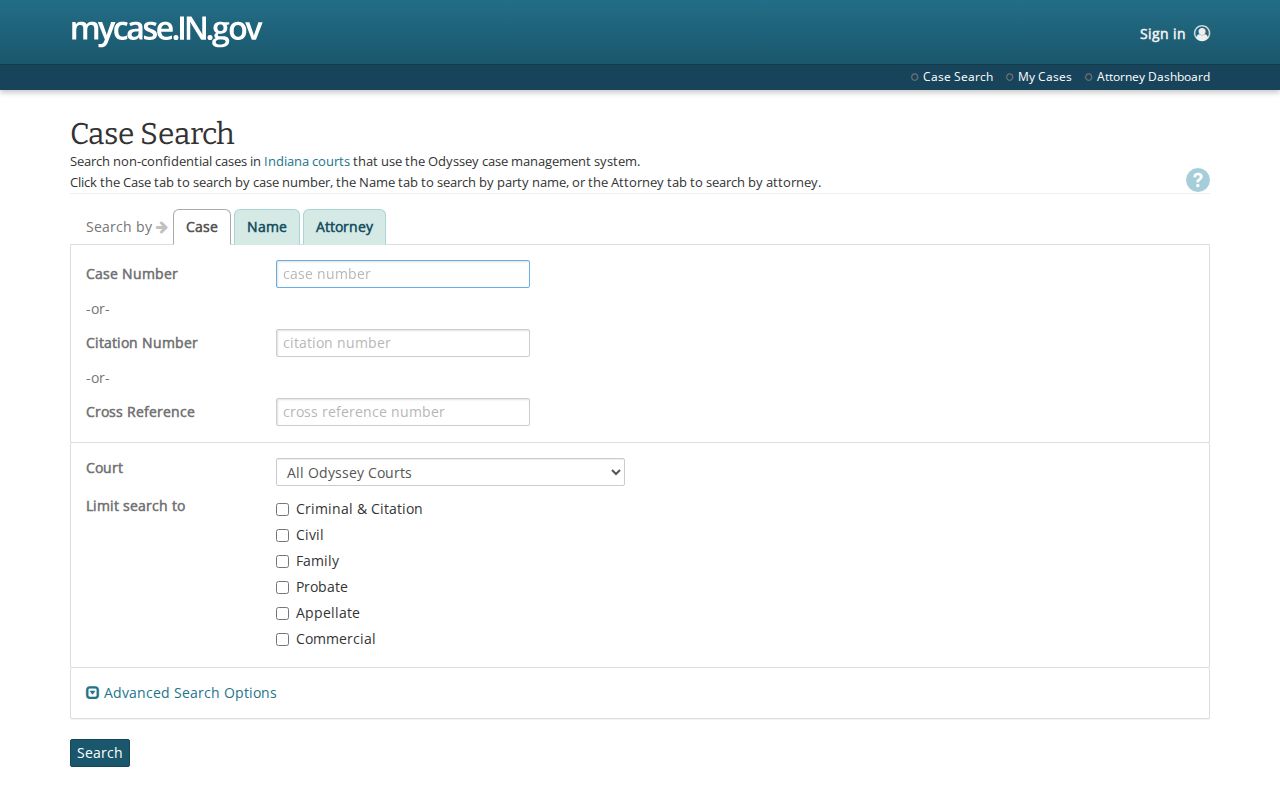
This neutral screen is the right place to enter an identifier you already know. Never use it to publish another person's birth date or allegations tied to a Perry County case.
Quick answer: MyCase can locate a public Perry case, but only the clerk's official record and responsible agency can settle an unclear status.
What a Warrant Search Asks For
The official search tips support several methods. Exact identifiers cut the risk of confusing people who share a name. Party search takes a last name with a first or middle name and a date of birth as narrowing data. A trailing wildcard is available. The separate sounds-like option cannot be combined with it, a detail that matters for any Perry County warrant lookup.
| Field label | Type | Required | Use |
|---|---|---|---|
| Case number | Text | No | Best route for a known Perry case |
| Citation number | Text | No | Traffic or infraction records |
| Cross-reference | Text | No | Alternative court identifier |
| Party name | Text | For party search | Narrow common names with care |
| Court and date | Filters | No | Select Perry Circuit Court and a range |
The portal may cap broad results at 1,000. Choose a court filter and a filing range to keep a Perry County search manageable, and never publish the inputs or output, especially a birth date.
Perry County Warrant Field Details
State field instructions matter here because a name query behaves differently from a web search. The official page documents those methods for Perry County researchers.
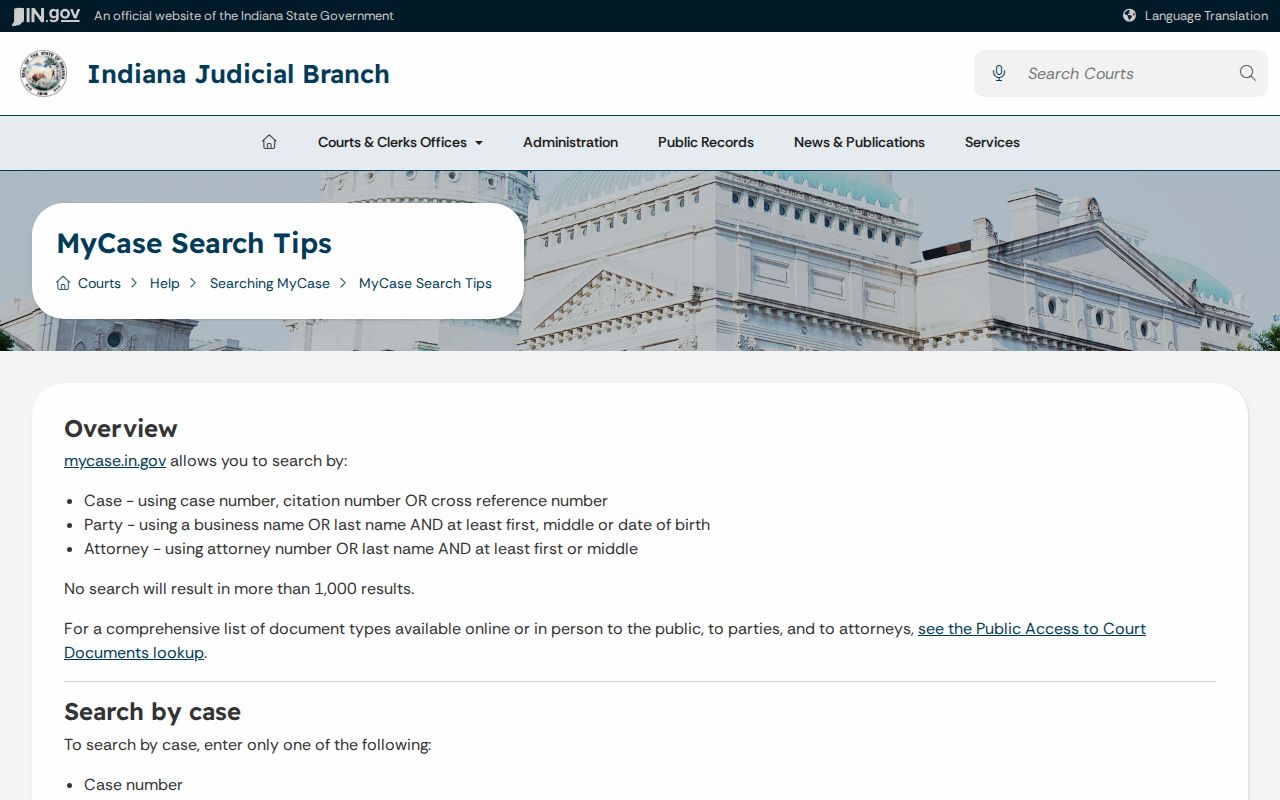
Use exact case data first. A sounds-like query can broaden spelling, but it raises false-match risk. Compare court, case type, filing date, and public context before treating a result as part of your Perry County matter. If the record is unclear, call the clerk at 812-547-3741. Staff can route a docket request but cannot give legal advice. Information you supply is not confidential, so keep the inquiry narrow and procedural.
Perry County Warrant Search Results
A public criminal summary may show a warrant indicator and related events. It is not a warrant copy. Note the date and ask whether later action changed the status. Perry County publishes no bulk table separating issued, active, served, recalled, and quashed warrants, so the docket is the real record.
| Case number | An identifier such as 62C01-YY-MM-XX-000000 routes the inquiry to Perry Circuit Court |
|---|---|
| Case status | The court case status, not always warrant service status |
| Event date | The date an entry posted; later action may control |
| Warrant indicator | A summary signal requiring current confirmation |
| Documents | Only material public under Indiana rules |
"Issued" means a court authorized a warrant. "Served" or "executed" usually means an agency acted. "Recalled," "quashed," or "vacated" reflects later court action. Only the docket and order establish what happened in a Perry County case.
Perry County Warrant Clerk Verification
The Clerk of the Perry Circuit Court keeps the local case records for Perry County. The office sits at 2219 Payne Street, Tell City, open weekdays from 8 a.m. to 4 p.m. Central, with phone 812-547-3741 and fax 812-547-9782. Ask for a public case or citation record by identifier, and explain which docket event needs clarification. The clerk page also lists a public terminal for court records. That gives you an official in-person option when a document does not display through MyCase or the online portal is not workable. Bring the case or citation number if you have it. Court staff can tell you where a public record is kept and which payment channel the office accepts. They cannot pick a legal strategy for you, and no one there can promise that a payment will recall a warrant. The official county court page links residents to MyCase and other court resources.
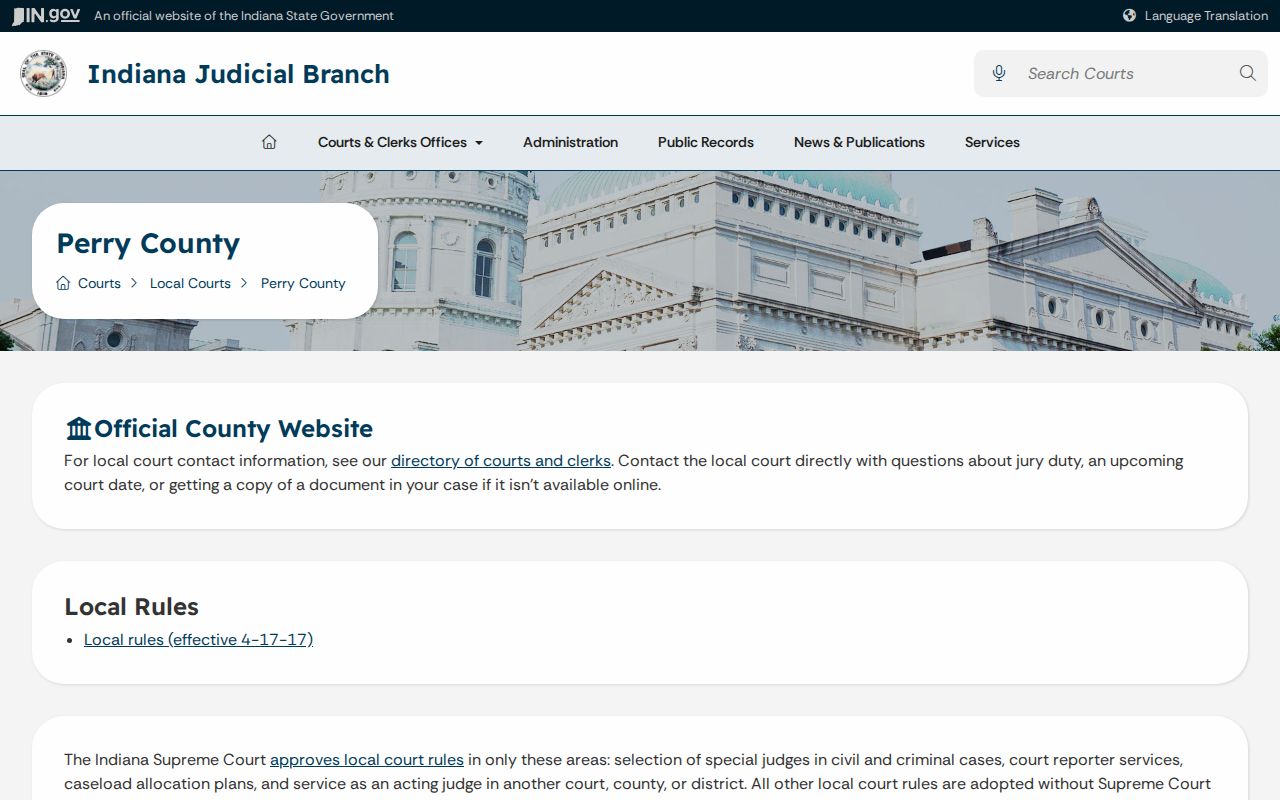
This court-centered route reflects one current local trial court. Former Cannelton and Tell City courts are abolished, so separate city warrant databases would be the wrong route for Perry County. A written request should describe the record with reasonable particularity under Indiana APRA. Seek a specific public docket item, policy, or form rather than a mass list. The clerk lists cash, money order, local checks, and a photo ID or driver license among its payment instructions. A no-cash drop box sits in front of the courthouse. Checks or money orders placed there should carry the cause number, and a self-addressed stamped envelope is requested when you want a receipt. Those are payment-handling details only. They do not mean every warrant can be cleared by payment, or that the docket updates the moment an item reaches the box.
Perry County Warrants: Who Holds What
Split the duties first. The clerk keeps case files, citations, filings, events, and court payment records. The Perry County Sheriff's Office, at 2211 Herrman Street, handles custody, booking, and bond logistics; its main number is 812-547-2441, though the sheriff publishes no dedicated public warrant line. The online contact form asks only for a name, an email address, and a message. Nothing labels it for warrant status or APRA requests. A short written request can still ask for the records custodian or for the office's policy on confirming warrants. Leave birth dates, booking numbers, home addresses, and sensitive case facts off a general form. Keep a copy of the request and any reply. Service spreads across several agencies, too: Tell City Police, Cannelton Police, the Troy Town Marshal, Indiana State Police, and the sheriff can each originate or serve process. Tell City Dispatch at 812-547-7068 takes nonemergency calls but promises no warrant confirmation. When no direct police number is clear, Cannelton City Hall at 812-547-8994 is the published fallback. Federal cases work differently. They sit outside MyCase. Perry County falls in the Southern District of Indiana, Evansville Division, and federal public case research runs through PACER.
Perry County Warrant Record Limits
The MyCase help capture places the official-record caveat beside its access rules.
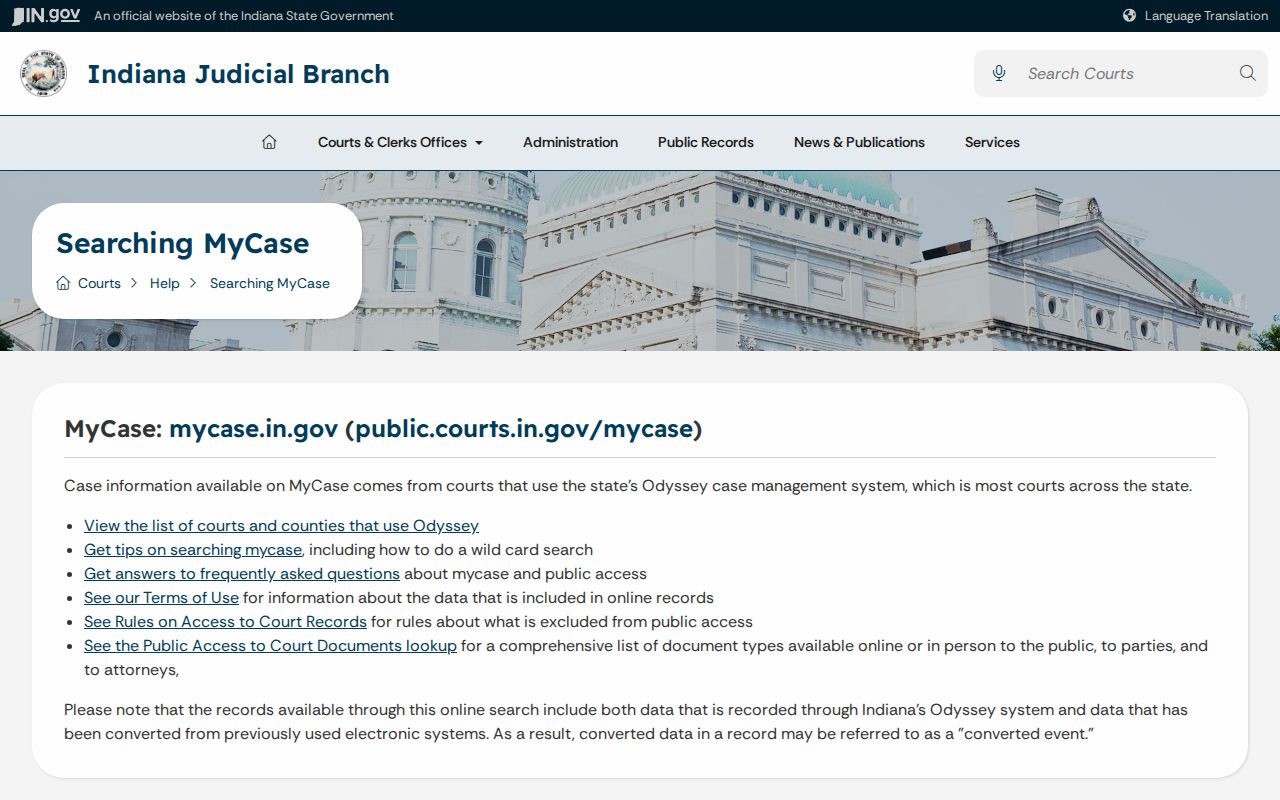
Limits matter here. An online entry can lag a later order, and a document missing from the portal may still sit in the official file or be withheld by law. Hang onto the case number and the screen date, then ask the clerk for the current public record. Filters shape results as well. MyCase lets you narrow by court, case type, open or closed status, and filing date, so a query aimed at Perry Circuit Court can miss a case filed in another Indiana county. A tight date range can hide an older matter. Search results may also cap at 1,000. Changing a filter may surface a lead, but no filter can open a sealed case or turn the public portal into a statewide operational warrant database for Perry County.
- Public summary
- An online view of selected nonconfidential data.
- Official record
- The record maintained by the clerk.
- Recall
- Court action withdrawing a warrant; payment alone does not prove it.
- FTA
- Failure to appear for a required court event.
Which Warrants Stay Restricted
The Indiana Rules on Access to Court Records set the boundaries for Perry County court files. Juvenile, sealed, and confidential material may not appear. Indiana APRA also lets agencies withhold or redact investigatory and protected law-enforcement records.
Key rules:
A sealed warrant or filing is not shown merely because someone asks.
Juvenile warrant and order information may be confidential.
An investigatory record may stay withheld, and zero results are not proof of no warrant.
When the check concerns your own case, a lawyer can pull the right record and explain custody risk before you approach any agency. The Perry County sheriff's bond page applies after arrest or booking. It is not a clearance service.
Perry County Warrant Scam Checks
In December 2025, local reporting described Perry County sheriff warnings about callers invoking warrants or court proceedings while demanding money. A demand proves nothing. End the call, find the official number on your own, and verify the alleged case through MyCase or the clerk. Then match the payment type to the stated reason. The sheriff's official posting-bond page lists cash or card routes after booking, a 9 percent GovPay service fee, and payment location codes 6903 or 6904. It also says the caller must supply the arrestee's name, booking number, and court-set bond amount. Those steps differ sharply from a surprise caller demanding instant payment to prevent arrest. Never buy gift cards, send cryptocurrency, give out bank data, or follow a caller's payment link. Official bond instructions serve someone already booked and require known facts such as a booking number and a court-set bond. They are not a remote threat-payment system. Note: A real case can coexist with a scam call, so verify the record and the payment channel as separate questions.